

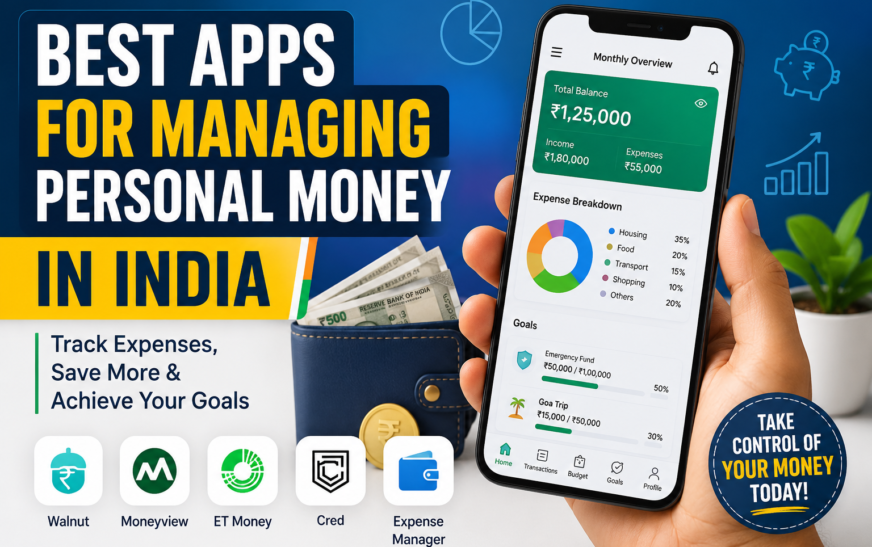
Looking for the best apps for managing personal money in India? You are in the right place. With dozens of finance apps competing for your attention, choosing the right ones can be overwhelming. The truth is, the right combination of money management apps can completely transform your financial life by helping you budget smarter, track every expense, save more, invest wisely, and even pay off debt faster.
India has become one of the most app friendly countries in the world thanks to UPI, Aadhaar based KYC, and a booming fintech ecosystem. Whether you want to track your daily expenses, set savings goals, invest in mutual funds, manage credit cards, or simply organize your monthly finances, there is a powerful app for every need, and most of them are completely free.
In this complete guide, you will discover the top 15 personal money management apps in India, what they do best, their key features, and how to choose the right ones to manage your money smartly. Let us dive in.
Why Use Money Management Apps in India?
Before exploring the list, here is why money management apps have become a must have for every Indian household.
Smart budgeting. Apps automatically categorize your income and expenses so you always know where your money is going.
Real time tracking. Connect your bank accounts and credit cards to see every transaction instantly, with zero manual work.
Save more money. Apps help you spot wasteful spending, find better deals, and stick to your savings goals.
Investment growth. Many apps let you invest in mutual funds, stocks, gold, and FDs directly from your phone.
Bill payments and UPI. Pay all your bills, transfer money, and split expenses with friends in just a few taps.
Tax planning. Top apps help you save taxes through smart investments and offer guidance during ITR filing.
Financial discipline. When you see your spending patterns clearly, you make better decisions automatically.
According to the Reserve Bank of India (RBI), UPI based transactions in India crossed record levels in the past year, showing how digital money management has become mainstream for everyday Indians.
Top 15 Best Apps for Managing Personal Money in India
Here is a carefully curated list of the top 15 personal money management apps in India, ranging from budgeting and tracking to investing and tax saving.
1. Walnut by Axio (Best for Expense Tracking)
Walnut by Axio is one of India’s most popular expense tracking and budgeting apps. It automatically reads your SMS to categorize every expense, set budgets, and track spending patterns.
Best for: Daily expense tracking and budgeting.
Key features: Auto SMS reading, expense categorization, budget setting, bill reminders, and credit score tracking.
2. Money Manager App
The Money Manager app is one of the most loved expense tracking apps with a clean, intuitive interface. You manually enter expenses but get powerful insights and budgeting tools in return.
Best for: Users who prefer manual entry for full privacy and control.
Key features: Income and expense tracking, custom categories, budget planning, and detailed reports.
3. INDmoney (Best All in One Money App)
INDmoney is a powerful all in one personal finance super app that lets you track all your money, including bank accounts, credit cards, investments, loans, and even foreign stocks.
Best for: Users who want one app to manage every part of their finances.
Key features: Net worth tracking, US stocks investing, mutual funds, FD comparison, tax filing, and credit score monitoring.
4. Groww (Best for Investing)
Groww is one of the most popular investment apps in India for mutual funds, stocks, ETFs, IPOs, and digital gold. It has a beginner friendly interface that makes investing easy for everyone.
Best for: Beginners and experienced investors who want a simple, powerful investing app.
Key features: Zero commission direct mutual funds, stocks, US stocks, IPOs, and SIP automation.
If you are exploring the right places to invest, also check our complete guide on investment options for beginners in India.
5. Zerodha and Kite (Best for Stock Trading)
Zerodha is India’s largest stock broker, and its Kite app is one of the best apps for stock trading. Zerodha Coin handles direct mutual funds without commission.
Best for: Active traders, stock investors, and serious mutual fund investors.
Key features: Low brokerage, advanced charting, fast execution, instant FDs, and seamless mutual fund SIPs.
6. ET Money (Best for Mutual Funds and Tax Planning)
ET Money is one of the best apps for managing investments, mutual funds, NPS, FDs, and even tax saving. It is also known for its expense tracking and credit score features.
Best for: Mutual fund investors and tax savers.
Key features: SIP automation, expense tracker, NPS investing, tax saving ELSS, and free credit score reports.
7. Kuvera (Best for Goal Based Investing)
Kuvera is a top mutual fund investment app focused on goal based investing. It is free and offers personalized investment plans based on your financial goals.
Best for: Long term investors with specific financial goals.
Key features: Free direct mutual funds, goal tracking, portfolio analysis, and family account management.
8. PhonePe (Best for UPI and Digital Payments)
PhonePe is India’s most widely used UPI and digital payment app. Besides payments, it offers digital gold, mutual fund SIPs, insurance, and even FDs.
Best for: Daily UPI payments, bill payments, and digital gold purchases.
Key features: UPI payments, bill recharges, digital gold, mutual funds, insurance, and FDs.
9. Google Pay (Best for Easy UPI Payments)
Google Pay (formerly Tez) is a fast, secure, and easy to use UPI app that millions of Indians trust for daily transactions.
Best for: Beginners and anyone looking for a simple UPI experience.
Key features: UPI transfers, bill payments, cashback offers, and gold investments.
10. Paytm (Best for Wallet and Payments)
Paytm is one of India’s oldest and largest digital payment apps, offering everything from UPI and wallets to mutual funds, insurance, and even credit.
Best for: Users who want one app for payments, recharges, and investing.
Key features: Wallet, UPI, mutual funds, stocks (via Paytm Money), insurance, credit cards, and EMI options.
11. CRED (Best for Credit Card Management)
CRED is a premium app designed for users with good credit scores. It helps you pay credit card bills on time, track expenses, and earn rewards in the form of CRED Coins.
Best for: Credit card users with good credit scores.
Key features: Credit card bill payment, credit score tracking, premium offers, rent payments, and CRED Mint for personal lending.
12. Money View (Best for Expense Tracking and Loans)
Money View is a feature rich app that started as an expense tracker and has now expanded into personal loans and credit lines.
Best for: Tracking daily expenses and quick personal loan needs.
Key features: Auto expense tracking from SMS, budget alerts, personal loans, and bill management.
13. Coin by Zerodha (Best for Direct Mutual Funds)
Coin by Zerodha lets you invest in direct mutual funds without paying any commission, which can save you lakhs of rupees in commissions over decades.
Best for: Long term mutual fund investors.
Key features: Direct mutual funds, no commission, SIP automation, and integration with Zerodha Kite for stocks.
14. Smallcase (Best for Theme Based Investing)
Smallcase lets you invest in baskets of stocks built around themes like clean energy, blue chips, dividend stocks, or AI companies. It is perfect for investors who want diversified stock portfolios without the hassle of picking individual stocks.
Best for: Investors who want curated stock portfolios.
Key features: Theme based investing, expert built portfolios, rebalancing, and integration with major brokers.
15. ClearTax (Best for Tax Filing)
ClearTax is one of India’s most trusted tax filing apps. It simplifies ITR filing, GST registration, and tax saving investments through a clean and easy interface.
Best for: Salaried professionals and small business owners filing their own taxes.
Key features: Free ITR filing, tax saving investments, GST filing, and tax optimization tips.
How to Choose the Right Money Management App
With so many options, picking the right apps can feel overwhelming. Use this simple framework to decide.
Define your need. Looking to budget better? Try Walnut, Money Manager, or Money View. Want to invest? Choose Groww, Zerodha, ET Money, or Kuvera. Need everything in one place? INDmoney is your best bet.
Check security. Always download apps from the official Google Play Store or Apple App Store. Ensure the app uses RBI approved practices and proper data encryption.
Compare features and fees. Most personal finance apps in India are free, but some charge for premium features like advanced analytics or tax filing.
Look for SEBI registration. For investment apps, confirm they are registered with SEBI and have a proper compliance framework.
Try multiple apps. Most apps are free to install. Try 2 to 3 in each category and stick with the ones that match your style best.
Read user reviews. Apps with 4.0+ ratings and millions of users are generally trustworthy. Read recent reviews for any service issues.
Types of Money Management Apps in India
Indian fintech offers multiple categories of money apps for every need.
Budgeting and expense tracking apps: Walnut, Money Manager, Money View, and INDmoney help you track every rupee.
Investment apps: Groww, Zerodha Kite, ET Money, Kuvera, and Coin help you invest in mutual funds, stocks, and FDs.
UPI and payment apps: PhonePe, Google Pay, and Paytm handle daily transactions, bill payments, and money transfers.
Credit and loan apps: CRED, Money View, and KreditBee help with credit cards, personal loans, and credit score tracking.
Tax filing apps: ClearTax, TaxBuddy, and Quicko simplify ITR filing and tax saving.
All in one super apps: INDmoney, Paytm, and PhonePe combine multiple services in a single app.
Tips to Maximize the Value of Money Apps
Just installing the right apps is not enough. Use these tips to actually transform your finances.
Connect all accounts. Link your bank accounts, credit cards, and investments to your main tracking app for a complete net worth view.
Set monthly budgets. Use budgeting apps to assign monthly limits for groceries, dining, fuel, and entertainment.
Automate everything. Set up auto debit for SIPs, FD renewals, and bill payments through your apps.
Track net worth monthly. Apps like INDmoney show your total net worth in real time. Review it monthly to stay motivated.
Use cashback and rewards. Apps like CRED, Paytm, and PhonePe offer regular cashback, scratch cards, and reward coins. Use them on actual needs, not unnecessary purchases.
Combine with strong financial habits. Pair these apps with our detailed 15 personal finance tips for the best long term results.
Review monthly. Spend 15 to 30 minutes every month reviewing your spending and investments through these apps.
Common Mistakes to Avoid With Money Apps
Avoid these traps that can hurt your finances or privacy.
Sharing OTPs or passwords. No legitimate app will ever ask for your OTP, UPI PIN, or net banking password. Never share them with anyone.
Downloading from unofficial sources. Only install apps from the Google Play Store or Apple App Store. Avoid APK downloads from unknown websites.
Ignoring app permissions. Read what permissions an app asks for. Be cautious of apps that ask for unnecessary access to contacts, photos, or SMS beyond what their function requires.
Falling for loan app scams. Many fake loan apps charge huge interest, harass users, and steal data. Stick to RBI registered NBFCs or banks for loans.
Using too many apps. Stick to 3 to 5 trusted apps. Too many apps cause confusion and clutter your phone.
Not enabling two factor authentication. Always turn on 2FA wherever available for extra security.
Money Apps for Different Life Stages
Different life stages need different money apps. Here is a quick guide.
Students: PhonePe or Google Pay for UPI, Groww for first investments, Money Manager for basic tracking. Combine with our guide on startup ideas for students to also boost your income.
Freshers and young professionals: Walnut for expense tracking, Groww or ET Money for SIPs, CRED for credit cards, ClearTax for tax filing.
Mid level professionals: INDmoney for net worth tracking, Kuvera for goal investing, Smallcase for stock portfolios, CRED for credit and rewards.
Senior professionals: INDmoney, ET Money, and Zerodha Kite for serious investing, plus ClearTax for advanced tax planning.
Retirees: Bank apps, post office schemes, INDmoney for net worth tracking, and PhonePe for UPI payments.
Money Apps vs Bank Apps: Which Is Better?
Most banks now have powerful apps too, so why use third party money apps?
Bank apps are great for managing one bank account, paying bills, transferring money, opening FDs, and applying for loans. Examples include HDFC MobileBanking, iMobile Pay, YONO SBI, and Kotak 811.
Third party money apps offer a unified view across multiple banks, credit cards, and investments. They provide better analytics, budgeting, and investment options than most bank apps.
The smart strategy is to use both. Bank apps for transactional banking, third party apps for budgeting, investing, and net worth tracking. If you want to explore the best bank apps, check our complete guide on the best bank for savings account in India.
How Money Apps Can Help You Save Thousands of Rupees
Smart use of money apps can save you a serious amount of money every year. Here is how.
Tracking expenses through apps like Walnut and Money Manager often helps users cut wasteful spending by 10 to 20 percent, saving 20,000 to 50,000 rupees per year.
Investing in direct mutual funds via Coin, Groww, or Kuvera saves about 1 to 1.5 percent in commissions, which compounds to lakhs of rupees over 20 to 30 years.
Tax saving guidance from apps like ET Money, ClearTax, and INDmoney can save you up to 46,800 rupees per year under Section 80C and other deductions.
Cashback and rewards from CRED, Paytm, and PhonePe easily add up to 5,000 to 15,000 rupees per year if used smartly.
When combined, the right money management apps can put 50,000 to 1 lakh rupees back in your pocket every year, in addition to building long term wealth.
Frequently Asked Questions (FAQs)
Which is the best app for managing personal money in India?
The best app for managing personal money in India depends on your needs. For all in one money management, INDmoney is a top pick. For investing, Groww and Zerodha lead the list. For expense tracking, Walnut and Money Manager are excellent. For UPI payments, PhonePe and Google Pay are the most popular.
Are money management apps safe to use in India?
Yes, money management apps from trusted developers are safe to use in India. Always download apps from the official Play Store or App Store, never share OTPs or passwords, enable two factor authentication, and read app permissions carefully. Stick with SEBI registered or RBI compliant apps for investing and lending.
Which is the best free app for budgeting in India?
The best free budgeting apps in India include Walnut by Axio, Money Manager, Money View, and INDmoney. All of them offer powerful budgeting and expense tracking features at zero cost. They are perfect for beginners who want to take control of daily spending.
Which is the best app for SIP and mutual fund investing in India?
The best apps for SIP and mutual fund investing in India are Groww, ET Money, Kuvera, Coin by Zerodha, and Paytm Money. All of them offer free direct mutual funds with zero commission, helping your investments grow faster over time.
Are UPI apps like PhonePe and Google Pay safe?
Yes, UPI apps like PhonePe, Google Pay, and Paytm are safe because they are regulated by the Reserve Bank of India and use bank level encryption. However, you should never share your UPI PIN, OTP, or password with anyone, regardless of who claims to be calling.
Can I file my income tax through a mobile app?
Yes. Apps like ClearTax, TaxBuddy, and Quicko let you file your income tax returns (ITR) directly from your mobile phone. They automatically import Form 16, calculate deductions, and submit your return to the Income Tax Department. For official ITR filing, visit the Income Tax Department of India website.
Which app is best for credit card management in India?
CRED is the most popular app for credit card management in India. It helps you pay credit card bills on time, track expenses, monitor your credit score, earn CRED Coins, and access exclusive offers. It is best suited for users with credit scores above 750.
Can I track multiple bank accounts in one app?
Yes. Apps like INDmoney, Money View, and Walnut allow you to track multiple bank accounts and credit cards in one place. They securely connect to your accounts using Account Aggregator framework or read transactions through SMS for a unified view.
Are loan apps safe in India?
Some loan apps are safe and regulated by the RBI as NBFCs, while many fake apps are scams. To stay safe, only use apps from RBI registered NBFCs or banks, read user reviews, avoid apps that ask for excessive permissions, and never share sensitive information like Aadhaar or PAN photos in chat messages.
Can I manage my entire money life through apps in India?
Yes. With the right combination of apps, you can manage your entire money life through your phone. Use one app for UPI and payments, another for expense tracking, another for investing, and one for tax filing. INDmoney is the closest to a true all in one money app in India.
Final Thoughts
Choosing the best apps for managing personal money in India is one of the smartest financial moves you can make. The right combination of apps gives you complete control over your money, helps you save more, invest smartly, pay bills on time, file taxes easily, and build long term wealth, all from your smartphone.
For most people, a winning setup includes one all in one app like INDmoney for tracking everything, one investing app like Groww or ET Money for SIPs, one UPI app like PhonePe or Google Pay for daily payments, one expense tracker like Walnut, and one tax filing app like ClearTax during ITR season.
Avoid the temptation to install too many apps. Stick with 3 to 5 trusted apps and use them consistently. Track your finances at least once a month, review your investments quarterly, and let these apps slowly transform you from a casual spender into a smart, disciplined money manager.
To take your money journey even further, explore our complete guides on investment options for beginners in India, best bank for savings account in India, and passive income ideas that actually work.
Which money management app are you going to start with first? Pick one or two from this guide today, take action this week, and share your favorite money app in the comments below.
Disclaimer: App features, fees, and offerings mentioned in this article are based on the most recent publicly available data at the time of writing and may change without notice. Always verify the latest details directly from official app pages, Google Play Store, or Apple App Store before using any app. This article is for informational purposes only and does not constitute financial advice. Always consult a SEBI registered financial advisor before making investment decisions.













2 Comments
[…] Apps make tracking automatic. For a complete list, check our guide on the best apps for managing personal money. […]
[…] For more budgeting tips, see our complete guide on the best apps for managing personal money. […]