

Looking for trusted financial advice on savings that you can actually apply to your daily life? You are in the right place. Saving money is the foundation of every successful financial journey. Whether you want to build an emergency fund, save for a dream vacation, plan for a home, fund your child’s education, or retire stress free, smart saving habits make every other financial goal possible.
The truth is, saving money is not about how much you earn. It is about how much you keep. Many people earning modest incomes build serious wealth over time, while others earning very high incomes struggle to save anything. The difference is mindset, habits, and a clear strategy. Once you master a few simple principles, savings stop feeling like a burden and start becoming an automatic, rewarding part of your financial life.
In this complete guide, you will discover 18 proven pieces of financial advice on savings, practical strategies that actually work, smart tools to use, and how to build a savings habit that lasts a lifetime. Let us dive in.
Why Financial Advice on Savings Matters
Before exploring the tips, here is why building strong savings is more important than ever in today’s world.
Inflation eats your money. Inflation averages around 5 to 7 percent every year in most economies. Without savings and smart investing, your purchasing power keeps shrinking over time.
Emergencies are inevitable. Medical emergencies, job losses, family obligations, or unexpected expenses can ruin your finances without a proper savings cushion.
Goals require capital. Buying a home, funding education, getting married, or starting a business all need substantial savings.
Retirement security. Without disciplined savings, retirement becomes a financial nightmare. With proper planning, it becomes the best years of your life.
Mental peace. Money problems are one of the biggest sources of stress. Strong savings reduce anxiety and improve overall quality of life.
Freedom of choice. Savings give you the freedom to take career risks, change jobs, travel, or pursue your passions without fear.
According to multiple studies by central banks and financial organizations, household savings have been declining while household debt has been rising sharply. This makes smart personal saving habits more important than ever.
18 Proven Pieces of Financial Advice on Savings
Here are 18 actionable savings tips that can transform your financial life.
1. Pay Yourself First
The single most powerful piece of financial advice on savings is to pay yourself first. The moment your salary arrives, transfer a fixed portion to your savings or investments before spending on anything else.
How to do it:
- Set up an auto debit for 20 percent of your salary to savings on payday
- Automate investments for the same date
- Treat savings like a non negotiable bill
This single habit alone can turn even modest earners into wealthy individuals over decades.
2. Follow the 50/30/20 Rule
The 50/30/20 rule is a simple budgeting framework that ensures consistent savings.
- 50 percent: Needs (rent, food, utilities, transport, insurance)
- 30 percent: Wants (dining out, entertainment, shopping, travel)
- 20 percent: Savings and investments
If you find 20 percent too aggressive at first, start with 10 percent and gradually increase. Even small consistent saving builds significant wealth over time.
3. Build an Emergency Fund First
Before chasing high returns or investing aggressively, build a solid emergency fund.
Emergency fund targets:
- Beginners: 3 months of expenses
- Salaried professionals: 6 months of expenses
- Freelancers and business owners: 9 to 12 months of expenses
Where to keep it:
- High interest savings account from a reputable bank
- Liquid mutual funds for slightly higher returns
- Short term fixed deposits
For the highest paying savings accounts available, check our complete guide on the best bank for savings account.
4. Track Every Expense
You cannot save what you do not track. Use modern apps or a simple notebook to record every income and expense.
Top apps for expense tracking:
- Mint for automated budget tracking
- YNAB (You Need A Budget) for proactive budgeting
- PocketGuard for spotting savings opportunities
- Monarch Money for comprehensive money management
Most people are shocked when they discover how much they spend on small things like coffee, food delivery, and online shopping. For more, see our guide on the best apps for managing personal money.
5. Cut Unnecessary Subscriptions
The average household spends a surprising amount each month on subscriptions they barely use. Audit your bank statements every quarter and ruthlessly cancel subscriptions you do not need.
Common subscriptions to audit:
- OTT platforms (Netflix, Amazon Prime, Disney+, HBO Max, Spotify, Apple TV)
- Gym memberships
- Magazine and newspaper subscriptions
- Software and app subscriptions
- Premium mobile plans with bundled services
Pro tip: Use apps like Rocket Money and Trim to automatically identify and cancel unused subscriptions.
6. Reduce Mobile and Internet Bills
Mobile and internet bills are one of the easiest expenses to optimize. Check our complete guide on how to save money on monthly mobile phone bills for 18 proven tips to dramatically lower your monthly telecom costs.
7. Save on Daily Expenses With Smart Habits
Small daily decisions add up to big savings over time.
Examples:
- Cook at home instead of eating out
- Use public transport or carpool instead of cabs
- Carry a water bottle and snacks
- Plan grocery shopping with a list
- Buy in bulk during sales
A consistent saver can free up a significant amount of money every month just from smart daily habits.
8. Use Cashback and Reward Apps
Many payment apps and credit cards offer cashback, scratch cards, and reward points on regular spending. Used smartly, they can save thousands of dollars per year.
Top cashback apps and platforms:
- Rakuten for online shopping cashback
- Honey for coupons and rewards
- Ibotta for grocery and shopping cashback
- Fetch Rewards for receipt based rewards
Pro tip: Use cashback only for things you would buy anyway. Do not let cashback push you to spend more than you should.
9. Avoid Lifestyle Inflation
When your income increases, the temptation is to upgrade everything: bigger house, fancier car, expensive clothes, branded gadgets, lavish dining. This is called lifestyle inflation, and it is the number one reason why high earners stay broke.
Smart strategy: Whenever your income increases, save and invest at least 50 percent of the extra amount. Use the rest to slowly improve your lifestyle.
For more wealth building habits, follow our complete guide on the 15 personal finance tips.
10. Automate Your Savings
Willpower fails. Automation never does. Set up automatic transfers from your salary account to:
- A high interest savings account for emergency funds
- Investment accounts for SIPs or recurring deposits
- Retirement accounts
- Goal based savings accounts
Automation removes emotion and inconsistency from saving and makes wealth building effortless.
11. Use Government Backed Savings Schemes
Most countries offer powerful government backed savings schemes that combine safety with attractive returns. Check what is available in your region.
Common types of government backed savings options:
- Provident fund schemes
- National savings certificates
- Senior citizen savings schemes
- Tax saving certificates
- Sovereign bonds and treasury bills
- Retirement savings accounts with tax benefits
For a detailed list of government savings options, check our guide on saving schemes in post office.
12. Use the Best Bank Accounts
Where you keep your savings matters as much as how much you save.
Smart banking strategy:
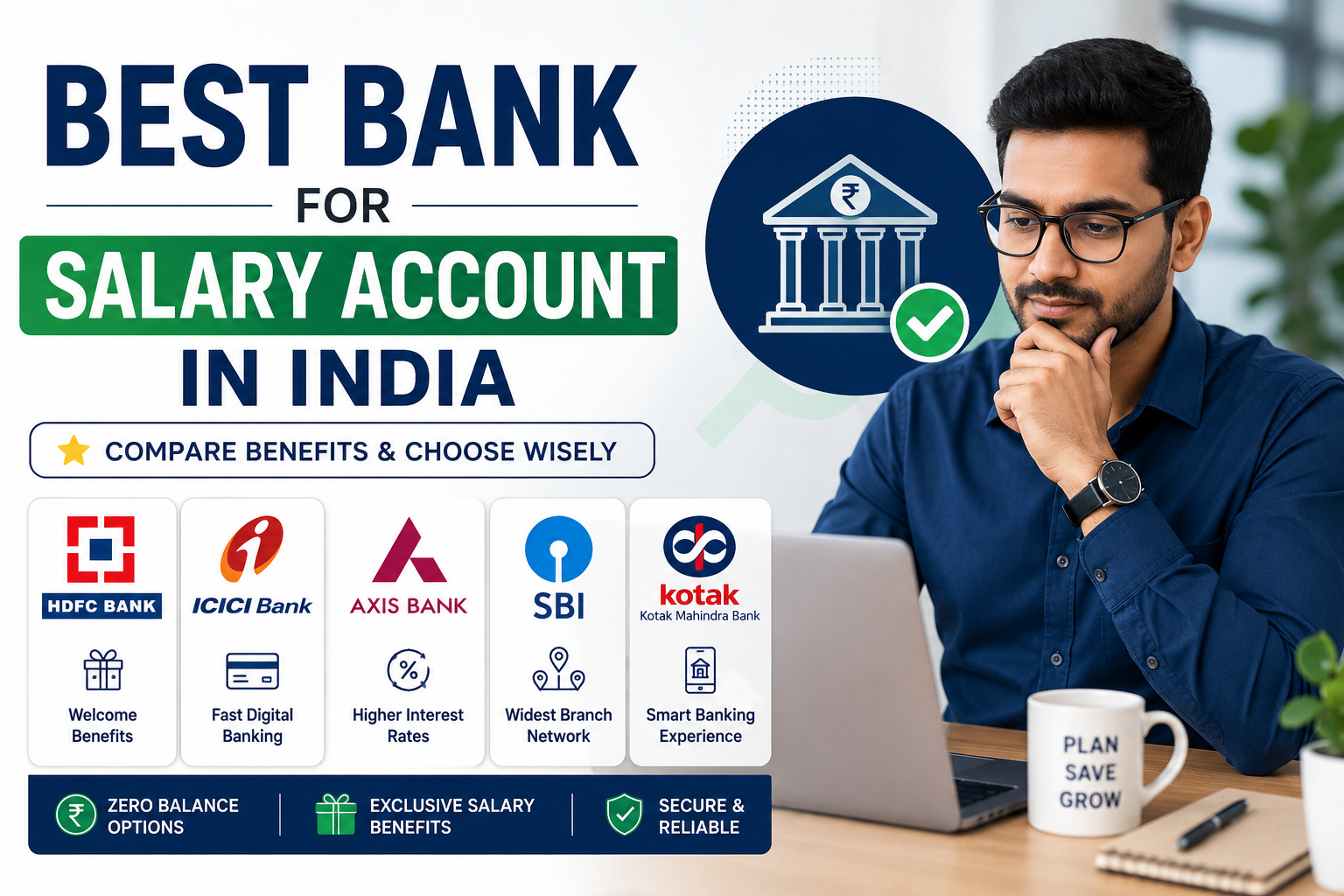
- Salary account: Choose a bank with premium perks and good interest rate. Check our guide on which bank is best for salary account for top options.
- Emergency fund: Keep in high interest savings accounts paying competitive rates
- Fixed deposits: Compare across banks. Read our guide on banks that give higher interest rate for highest paying options.
- Long term: Use tax advantaged accounts and equity investments for inflation beating growth
13. Plan Major Purchases in Advance
Impulse buying is one of the biggest reasons people fail to save. Plan major expenses ahead of time and save monthly toward them.
Examples:
- Save monthly for festive shopping in dedicated savings accounts
- Build a vacation fund 12 months before traveling
- Save for big purchases (car, electronics, jewelry) over time
- Plan kids’ education and family events with long term investments
This avoids costly EMIs and debt traps.
14. Save on Taxes Wisely
Smart tax planning is essentially smart saving. Most countries offer tax saving options that can add significant amounts to your savings every year.
Common tax saving options to explore:
- Retirement account contributions (401(k), IRA, NPS, EPF, or similar)
- Tax advantaged investment accounts (ISA, Roth IRA, ELSS, etc.)
- Health insurance premium deductions
- Mortgage and home loan interest deductions
- Education and child care related deductions
Consult a qualified tax advisor or visit your country’s official tax website to maximize your tax savings legally.
15. Avoid High Interest Debt
Credit cards, personal loans, and “buy now pay later” services often charge very high interest rates. This destroys your savings faster than anything else.
Smart approach:
- Pay credit card bills in full every month
- Avoid taking personal loans for non essential expenses
- Skip “EMI on mobile phones” or fancy gadgets unless absolutely needed
- Pay off high interest debts before investing in low yield products
If you must borrow, learn smart borrowing in our complete guide on how to apply for a personal loan online quickly.
16. Save Strategically for Big Goals
Different financial goals need different savings strategies based on the time horizon and risk.
Short term goals (1 to 3 years): High interest savings account, fixed deposits, short term recurring deposits, liquid funds.
Medium term goals (3 to 7 years): Hybrid mutual funds, debt funds, balanced funds, government bonds.
Long term goals (7+ years): Equity mutual funds via SIPs, retirement accounts, stocks, real estate.
For more wealth building strategies, also explore our guide on investment options for beginners.
17. Increase Your Income to Boost Savings
Saving has natural limits. Earning has none. Increase your income through:
Smart income building strategies:
- Develop high paying skills (coding, design, marketing, content, sales, AI)
- Upskill through platforms like Coursera, Udemy, and LinkedIn Learning
- Start a side hustle (freelancing, blogging, YouTube, affiliate marketing)
- Ask for raises with measurable performance proof
- Switch jobs every 2 to 3 years for salary hikes
- Build passive income streams
For more ideas, check our complete guide on passive income ideas that actually work.
18. Review and Adjust Regularly
Personal finance is dynamic. Review your savings, investments, and budgets at least once a quarter.
What to review:
- Are you saving the target percentage of income?
- Are your savings growing toward defined goals?
- Are there expenses you can cut further?
- Are there investments giving poor returns to replace?
- Have your goals changed and need new plans?
Quarterly reviews keep you on track and prevent financial drift.
How Much Should You Save Every Month?
This is one of the most common questions. Here is realistic advice based on different income levels.
Lower income brackets: Save 10 to 15 percent. Focus on emergency fund and basic investments.
Middle income brackets: Save 20 to 25 percent. Build emergency fund, maximize retirement contributions, and start investing in equity.
Upper middle income brackets: Save 25 to 35 percent. Aggressive investing, diversified portfolios, real estate, and stocks.
High income brackets: Save 35 to 50 percent or more. Diversified investments, international assets, alternative investments, and wealth preservation.
The percentage matters more than the absolute amount when you are starting out.
Where to Keep Your Savings
Different savings have different purposes, and each deserves the right home.
Emergency fund:
- High interest savings accounts
- Liquid mutual funds
- Short term fixed deposits
Short term goals (1 to 3 years):
- Bank fixed deposits
- Recurring deposits
- Debt funds
- Short term government bonds
Medium term goals (3 to 7 years):
- 5 year fixed deposits in top paying banks that give higher interest rate
- Balanced or hybrid mutual funds
- Tax saving certificates
Long term goals (10+ years):
- Equity mutual funds (SIPs)
- Retirement accounts with tax benefits
- Government backed long term schemes
- Direct stocks (long term holding)
Tips to Build Strong Savings Habits
Use these psychological tricks to make saving easier and more automatic.
Visualize your goals. Define what you are saving for (a house, retirement, freedom). Visualization motivates discipline.
Use multiple accounts. Keep separate accounts for different goals so the money does not get mixed.
Reward small wins. When you hit a savings milestone, celebrate (without overspending).
Track in apps. Use one of the best apps for managing money to visualize your savings growth.
Find accountability. Discuss financial goals with a partner, mentor, or close friend who cheers you on.
Educate yourself. Read personal finance books, follow trusted finance creators, and watch educational videos to stay inspired.
Start small. Saving a small amount per month is better than nothing. Increase gradually as your income grows.
Common Savings Mistakes to Avoid
Avoid these traps that derail most savers.
Saving leftover money instead of saving first. If you wait until month end to save, you will never have any leftover. Pay yourself first.
Keeping all savings in savings accounts. Earning very low interest in a savings account barely beats inflation. Use higher yielding instruments for the bulk of your savings.
Mixing savings with daily expenses. Without separation, savings get spent. Always keep savings in a different account.
Skipping insurance. A single uninsured medical or accident emergency can wipe out years of savings. Get adequate health and term insurance.
Falling for high return scams. Avoid Ponzi schemes, “guaranteed double your money” offers, and dubious cryptocurrency plays.
Borrowing for lifestyle expenses. Buying gadgets, fashion, or weddings on EMI traps you in a debt cycle.
Not increasing savings with income. Many people save the same amount even after big income hikes. Increase savings percentages over time.
Savings Habits That Cost or Save You a Fortune Over Time
Let us see how small savings habits compound into huge wealth or losses over decades.
Saving a small amount per month from age 25 to 60 (35 years) at 12 percent returns in equity mutual funds: Massive corpus (potentially crossing the million dollar mark).
Saving the same amount only from age 40 (only 20 years): A much smaller corpus, often less than one third of the early starter.
Spending an extra small amount per month on lifestyle from age 25 to 60: Massive opportunity cost in lost potential wealth.
The compound effect of small saving habits over 30 to 40 years is mind blowing. Even tiny changes today can mean huge differences by retirement.
Smart Savings Tools and Resources
Make use of these tools to maximize your saving game.
Top tracking apps:
- Mint, YNAB, PocketGuard, Monarch Money
Top investment platforms (region dependent):
Top free finance calculators:
- Compound Interest Calculator on Investor.gov
- Retirement Calculators on financial websites
- Budgeting tools on personal finance apps
Top learning resources:
- Books like “The Psychology of Money” by Morgan Housel and “I Will Teach You to Be Rich” by Ramit Sethi
- YouTube channels and blogs on personal finance
- Podcasts on saving and investing
Frequently Asked Questions (FAQs)
What is the best financial advice on savings?
The best financial advice on savings is to pay yourself first, save at least 20 percent of your income, automate your savings through SIPs and auto debits, build an emergency fund, avoid lifestyle inflation, and invest savings into higher yielding instruments like mutual funds and retirement accounts rather than letting them sit in low interest accounts.
How much should I save from my monthly income?
A practical target is to save at least 20 percent of your monthly income, following the 50/30/20 rule. Beginners can start with 10 percent and gradually increase. Higher income earners should save 25 to 50 percent of income to build wealth and reach early retirement.
Where should I keep my savings?
Keep your savings in different places based on the goal. Emergency funds should be in high interest savings accounts or liquid funds. Short term goals can use fixed deposits and recurring deposits. Medium term goals fit debt funds and balanced funds. Long term goals should be in equity mutual funds, retirement accounts, and stocks for inflation beating growth.
How do I save money on a low income?
Even on a low income, you can save by tracking expenses, cutting unnecessary subscriptions, cooking at home, using public transport, avoiding impulse buying, and starting small monthly investments. The percentage of income saved matters more than the absolute amount when starting out.
What is the 50/30/20 rule for savings?
The 50/30/20 rule is a popular budgeting framework. Allocate 50 percent of your income to needs (rent, food, utilities, transport), 30 percent to wants (entertainment, dining out, shopping), and 20 percent to savings and investments. It is simple, effective, and works for most income levels.
How much emergency fund should I have?
Most experts recommend an emergency fund of 3 to 6 months of essential living expenses. Salaried professionals can target 6 months. Freelancers and business owners should aim for 9 to 12 months due to variable income. Keep it in a high interest savings account or liquid fund for easy access.
Should I save money or invest?
You should do both. First, build an emergency fund of 3 to 6 months of expenses in a high interest savings account. Then start investing the rest in mutual funds, retirement accounts, and other higher yielding instruments. Pure saving in savings accounts barely beats inflation, so investing is essential for long term wealth.
Are fixed deposits good for savings?
Fixed deposits are good for short term savings, emergency funds, and capital protection. They offer guaranteed returns with safety. However, fixed deposits do not beat inflation by much. For long term wealth building, combine fixed deposits with equity mutual funds and retirement accounts for better real returns.
How can I save money for retirement?
For retirement savings, use a combination of employer sponsored retirement accounts, tax advantaged individual accounts, equity mutual fund investments, and government backed long term schemes. Start early in your 20s, invest at least 20 percent of your income consistently, and increase contributions with every salary hike. For complete strategies, read our financial advice for retirement guide.
Is saving 10 percent of income enough?
Saving 10 percent is a good starting point, but it may not be enough for long term wealth building. Most financial experts recommend 20 to 30 percent for comfortable retirement and major life goals. Start with 10 percent if needed and increase by 2 to 5 percent every year as your income grows.
Final Thoughts
Smart financial advice on savings is one of the most valuable knowledge you can apply in your life. The earlier you start saving and the more consistent you stay, the easier it becomes to build wealth, achieve life goals, and enjoy peace of mind. The principles are simple, but the discipline to follow them every month is what separates the wealthy from the financially stressed.
Remember, saving is not about depriving yourself today. It is about creating a future where you have choices, freedom, and security. Even small changes like saving a bit more per month or cutting one unnecessary subscription can compound into huge amounts over decades.
The biggest enemy of saving is procrastination. Most people wait for “the right time” to start, which never comes. The best time to start saving was yesterday. The next best time is right now. Pick 2 or 3 tips from this guide that resonate with you the most and start applying them this week.
To take your financial journey even further, also explore our guides on investment options for beginners, 50 money saving tips that actually work, and best bank for savings account to build a complete financial plan.
Which savings tip will you apply first? Pick one today, take action this week, and share your savings journey in the comments below.
Disclaimer: Interest rates, returns, and scheme features mentioned in this article are based on general publicly available data at the time of writing and may change without notice. Markets are subject to risks. Past performance does not guarantee future returns. Always read scheme documents carefully and consult a qualified financial advisor before making investment decisions. This article is for informational purposes only and does not constitute financial advice.